

How Ti Clean The Inside Of Taillights

Keep your lights shining bright past removing water buildup
Skip to the expert stuff:
- Proceed your lights shining vivid by removing water buildup
- How to Remove and Keep out Water from Vehicle Tail Lights
- Step 1 – Remove the Tail Low-cal Associates
- Stride two – Use a Hair Dryer to Dry the Tail Low-cal
- Step three – Inspect the Seal on the Tail Calorie-free Enclosure
- Stride four – Attach Tail light Associates to the Vehicle Body
- Conclusion
Vince here with ScannerAnswers to share some tips for keeping your car or truck in height running shape. We've got some friends in Seattle that suffer very rainy seasons and experience condensation build-upwards in their lights. This presents some serious problems because information technology dims the headlights and taillights and can potentially burn out your bulbs. Peculiarly if y'all're using an HID headlight kit.
If you happen to get some water in your tail lights and are wondering how to remove it and keep it out, and then you lot demand to sympathise a few simple things regarding the tail light associates of your automobile.
The tail lights are sealed from the mill. There are also water channels built into the tail calorie-free associates. It is non unusual to find rubber seals forth the casing. Merely if a seal is cleaved or missing, and so water will take a chance to seep within the casing.
Call up that not all vehicles are manufactured the aforementioned way and the tail light associates will differ according to the make and model of your car. Still, the basic assumption would exist to open up the trunk, remove the rug sidings on the back of the tail light assembly, and carefully inspect the nuts or screws that agree the tail calorie-free in place.
H2o and condensation on vehicle tail lights are unsightly to look at. It can even be a determining factor in the rapid deterioration of the lens, bulb, and casing of your tail lights. If you don't act quickly, then rapid deterioration will not just affect the lighting operation of the tail lights, but it will also make your automobile look old and tedious.
Of course, you can always buy a quality fix of aftermarket tail lights for your vehicle, just not everyone prefers the tuned or modified expect, and not everyone has money to fire for a new set up of lights. Yous tin expect to shell out at least $200 for a new set of tail lights (you volition probably spend more for OEM manufacturing plant parts).
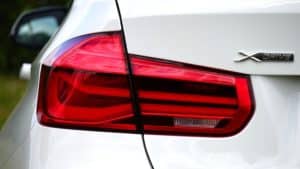 If y'all happen to own a new car with the warranty still intact, so information technology's best to bring your machine to the dealer and accept the tail lights inspected or replaced. The presence of water or condensation might be caused past a faulty tail light assembly or inadequate application of sealants.
For those who accept older cars, here are the simple steps on how to remove water and condensation on the tail lights of your vehicle.
How to Remove and Continue out H2o from Vehicle Tail Lights
You Will Need:
- Hair dryer or blower
- Weatherstrip agglutinative, butyl or silicone based sealant
- Wrench
- Screwdriver
- Terry cotton fiber rag
Step 1 – Remove the Tail Light Assembly
Remove the tail light that contains h2o and condensation. This procedure volition differ according to the make and model of your machine. Refer to the owner's manual or repair transmission of your automobile. You also need to remove the electrical sockets and the bulbs before removing the tail calorie-free from the vehicle body.
Yes, you can yet remove water and condensation even if yous don't remove the tail lights from the body. But if in that location is too much h2o in there, then y'all have no choice only to remove the tail light assembly so you lot tin milk shake off all those excess water and moisture earlier proceeding to estrus and dry out upwardly the condensation.
Stride two – Use a Hair Dryer to Dry out the Tail Light
Point a hair dryer or hot air blower on the socket holes at the back of the tail light assembly. This will aid heat up the tail light and apace evaporate water or condensation.
If your tail lights have a lot of excess water, let the water drip past turning the tail light over and remove whatever traces of backlog moisture before using the hair dryer. Remember not to point the hair dryer direct on the lens of the tail light as excess oestrus may warp the lens and cause damage. Point the pilus dryer on the back of the tail light as the plastic casing is more durable against backlog heat than the lens itself.
Repeat the process until all water and condensation have been evaporated. Heat the tail light for 5 minutes and rest for two minutes before repeating the higher up-stated procedure.
Step 3 – Inspect the Seal on the Tail Light Enclosure
The seal or weather-stripping on the tail low-cal assembly might be warped or damaged, causing the accumulation of moisture or water. A commercially available atmospheric condition-strip agglutinative or silicone sealant should be practical to the edges of the tail low-cal enclosure to further seal against water and condensation.
Carefully inspect the surrounding area and search for water entry points on the trunk of the casing. The weather-strip adhesive may come in handy tubes for ease of application. Follow the directions stated on the tube and permit dry for at to the lowest degree thirty minutes.
Hither is an unconventional way to find out where the leak is coming from: you tin can partially fill the tail lite assembly with tap water, and motility the tail calorie-free effectually to detect the source of the leak. If water spills out, then y'all have found the source of the leak.
Of course, this besides means that you will need to thoroughly dry the insides of the tail light before applying sealant. This method is non for everyone, but it is better to find the source of the leak rather than applying sealant on the entire casing.
Step 4 – Attach Tail light Assembly to the Vehicle Body
Now that you have removed the water and condensation from the tail lights, it is time to put them dorsum in the factory position.
Align the tail light assembly on the vehicle body and secure by tightening the nuts or screws that concord the enclosure in place. Insert the bulbs and the electrical sockets and test for proper functioning.
Conclusion
The methods prescribed above will also work on the headlights of your vehicle. You will need to be actress careful when using hot air on the headlights so you don't run the hazard of damaging the sensitive lens. But basically the procedures are the aforementioned, and you can have a sparkling make clean set of headlights devoid of water and condensation.
If your car has water and condensation on the tail lights, you don't demand to replace them right abroad. Just following the steps above will not only save you coin, merely information technology volition brand your car look meliorate without burning a deep pigsty in your pocket.
Now that yous have some clean headlights, brand certain your engine is running in peak condition by running a full engine diagnostic scan with one of these OBDII code readers
Vince

Source: https://scanneranswers.com/remove-water-condensation-tail-lights-vehicle/
Posted by: glovertheman.blogspot.com
0 Response to "How Ti Clean The Inside Of Taillights"
Post a Comment